
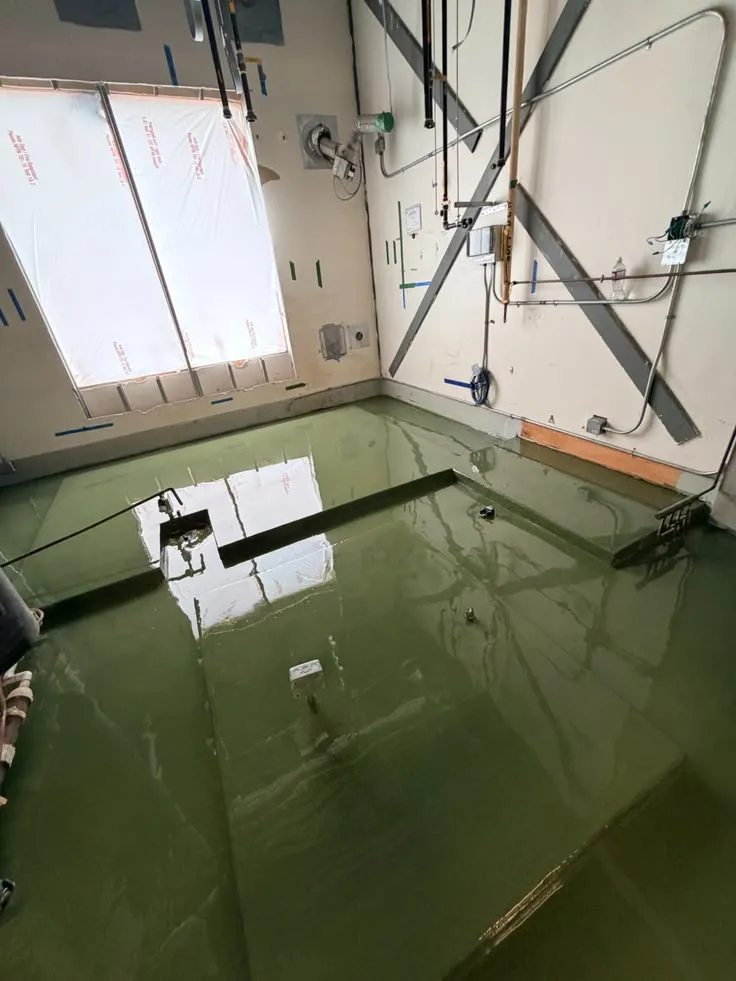
Mechanical rooms are designed around equipment performance, but the floor often becomes the first surface affected when something leaks. Condensation, pump seals, valves, cooling lines, lubricants, and water-treatment chemicals can create localized exposure around HVAC units, boilers, generators, and pumps. In these rooms, flooring is not only about appearance. It can support maintenance access, protect the concrete, and make small leaks easier to identify and clean before they become larger problems.
Identify Where Leaks Are Most Likely
Not every part of a mechanical room faces the same exposure. Pumps, drains, valves, condensate lines, and chemical-treatment equipment usually create the highest-risk zones.
Facility teams should review maintenance records and note where leaks or drips have occurred previously. Even recurring moisture can affect bare or damaged concrete over time. Mapping these locations helps define where extra attention may be needed during floor preparation, detailing, and future inspection.
A risk map is more useful than treating every square foot as if it experiences identical conditions.
Waterproofing Depends on the Whole System
A seamless resinous floor can help reduce direct liquid penetration into concrete, but effective protection depends on more than the topcoat. Cracks, joints, penetrations, and poorly prepared edges can become weak points if overlooked.
When evaluating Epoxy Flooring For Mechanical Rooms, facility managers should ask how the complete system handles moisture-prone areas. Flexible resin layers, elastomeric membranes, suitable primers, and chemical-resistant topcoats may all play different roles depending on the room.
The specification should reflect the equipment, substrate, and liquids present rather than rely on one generic coating build.
Penetrations Need Detailed Treatment
Mechanical rooms contain numerous interruptions in the floor: pipes, conduit, equipment bases, drains, curbs, and support posts. These locations can be difficult to prepare and may collect moisture if edges are poorly sealed.
Large grinding equipment can prepare open concrete efficiently, but tight spaces around penetrations often require additional work. Existing sealants, weak patches, and contaminated material may need removal before new flooring layers are installed.
Careful detailing can create a more continuous surface and reduce difficult maintenance points.
Moisture Testing Can Change the Plan
Some moisture problems come from above, while others may originate within or beneath the concrete slab. A floor can appear dry even when moisture vapor is moving through it.
Professional evaluation may include relative-humidity or moisture-vapor testing when conditions justify it. Results can influence primer selection, membrane requirements, or other parts of the system.
Managers should avoid assuming that a surface leak causes every blister or failed coating. Understanding the moisture source is important before choosing the repair approach.
Chemical Exposure Should Be Documented
Mechanical rooms may contain oils, coolants, water-treatment chemicals, cleaning products, and other service fluids. These substances can create different demands from ordinary water exposure.
An Epoxy Floor Company In Green Brook should be given a realistic list of chemicals used around the equipment, including how frequently spills occur and how they are cleaned. Chemical resistance varies between resin systems, so this information helps guide material selection.
The goal is to match the floor to normal maintenance conditions rather than a spill-free environment.
Texture Should Support Maintenance Access
Condensation and service fluids can make some areas slippery, especially around pumps or drains. Additional aggregate can improve traction, but too much texture may make cleanup more difficult.
Maintenance teams should consider employee footwear, cleaning tools, spill frequency, and the need to roll carts or service equipment through the room. The best surface profile balances footing with practical maintenance.
Different zones can require different levels of texture rather than one aggressive finish throughout the room.
Leak Detection Becomes Easier on a Clean Surface
One benefit of a continuous, well-maintained floor is that new leaks can become easier to spot. Dark stains, puddles, or residue are more visible when the surface is clean and free from years of dust and patchwork.
Routine inspections should focus on equipment bases, drains, valves, joints, and previous leak locations. Small changes can then be documented before they become larger maintenance concerns.
Flooring cannot prevent mechanical failure, but it can support better visibility and housekeeping around critical equipment.
Conclusion
Leak-prone mechanical rooms need flooring planned around the way water, chemicals, equipment, and maintenance activity interact with concrete. Containment is not created by the finish alone; substrate condition, moisture evaluation, penetrations, flexible layers, texture, and chemical resistance all contribute.
By identifying high-risk zones before installation and continuing to inspect them afterward, facility managers can make the floor part of a broader preventive-maintenance strategy. A carefully specified resinous system can protect vulnerable concrete, simplify cleanup, and create a more manageable environment around equipment that the building depends on every day.