

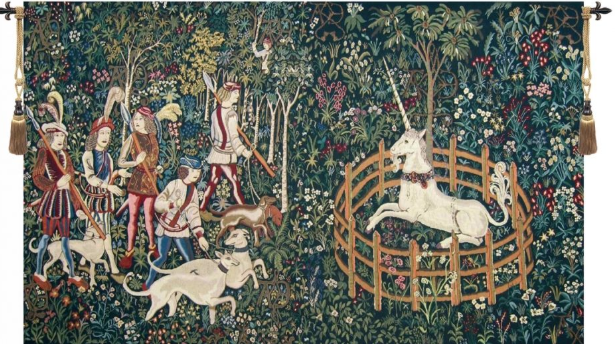
Wall textiles have long been used as storytelling mediums in European art history, especially during the medieval period. Among the most iconic designs is the unicorn tapestry, which represents mythological symbolism, craftsmanship, and cultural storytelling that dates back to the late Middle Ages. These tapestries were often woven using intricate techniques that combined wool and silk threads to create detailed narrative scenes.
In traditional European art collections, the unicorn tapestry is closely associated with the famous “Hunt of the Unicorn” series, which depicts the pursuit, capture, and symbolic meaning of the unicorn in a richly detailed visual format. These artworks were not just decorative pieces but also conveyed deeper spiritual and cultural meanings related to purity, mystery, and nature.
Artistic Structure and Symbolism in Unicorn Tapestries
The medieval unicorn-themed designs are known for their complex storytelling structure. A typical unicorn tapestry often illustrates multiple scenes within a single woven panel, showing hunters, landscapes, and mythical elements intertwined in one composition. These designs were created using jacquard weaving methods that allowed for high precision and detail.
Historically, such tapestries were displayed in castles and noble homes to demonstrate wealth and artistic appreciation. The unicorn itself symbolized purity and the unattainable, often depicted alongside floral backgrounds and forest settings. In many cases, these artworks were part of a larger narrative cycle that visually explained allegories of love, sacrifice, and spirituality.
The craftsmanship behind these textiles reflects centuries-old weaving traditions that required highly skilled artisans. The use of layered textures and natural color palettes contributed to their enduring visual appeal.
Evolution of Decorative Wall Hanging Styles
Over time, the concept of medieval storytelling textiles influenced various decorative art forms. Today, the unicorn tapestry style continues to inspire modern interior décor, especially in the form of woven wall hangings that replicate historical designs.
Many contemporary wall pieces draw inspiration from medieval themes, blending artistic heritage with modern weaving techniques. This includes designs that resemble traditional forest scenes, mythical creatures, and symbolic compositions similar to those found in historic collections.
Among related styles, designs such as the tree of life tapestry have also gained popularity due to their symbolic representation of growth, connection, and harmony. While the unicorn tapestry focuses on myth and purity, tree-inspired designs emphasize natural balance and continuity of life.
Similarly, decorative pieces known as medieval unicorn tapestry designs continue to preserve the visual storytelling tradition of the Middle Ages, often being recreated for modern home interiors that value historical aesthetics.
Cultural Influence and Interior Design Relevance
The popularity of tapestry-based décor has grown significantly in modern interior design due to its ability to add depth, texture, and narrative to living spaces. A unicorn tapestry can serve as a focal point in a room, offering both artistic value and historical reference.
Unlike printed artwork, woven wall textiles provide a tactile dimension that enhances visual richness. This makes them suitable for creating a warm and classical ambiance in homes, libraries, and artistic spaces. Their layered composition and detailed imagery allow them to stand out as statement pieces.
Additionally, tapestry wall hanging designs are widely appreciated for their versatility. They can complement both traditional and contemporary interiors, depending on their color schemes and thematic elements.
Conclusion: Timeless Appeal of Mythical Textile Art
The enduring charm of the unicorn tapestry lies in its ability to merge mythology, craftsmanship, and storytelling into a single artistic form. These woven artworks continue to influence modern decorative trends in the form of tapestry wall hanging while preserving the essence of medieval artistic traditions. From historical castle displays to modern living spaces, the tree of life tapestry alongside medieval-inspired designs reflects humanity’s long-standing fascination with symbolism and nature. The medieval unicorn tapestry remains a powerful example of how art can carry meaning across centuries, while the concept of tapestry wall hanging continues to evolve as a timeless interior design element.